
Beautiful Plants For Your Interior
Beautiful Plants For Your Interior

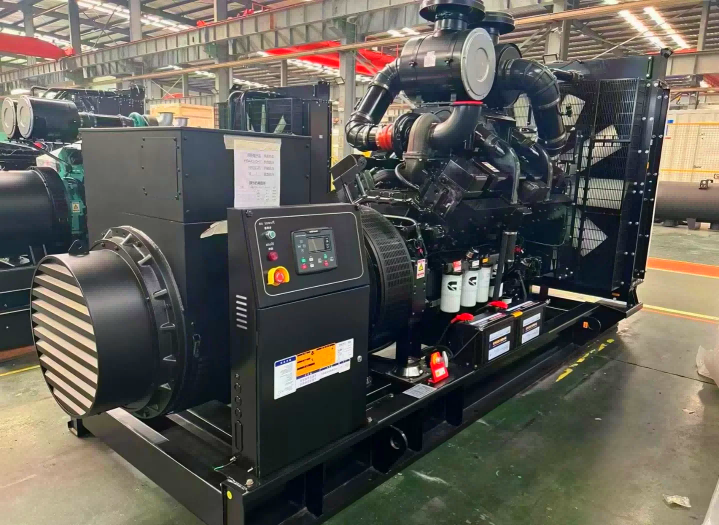
– Primary Power Supply (24/7 continuous power generation, construction sites/remote areas without mains power)
PRP (Power Proportion) = Total Load×1.1, can run continuously indefinitely
– Backup Emergency (Hospitals/Factory/Property Management, only used during power outages)
Standby Power = Critical Load×1.2; only 1 hour of full load is allowed within 12 hours
⚠️ Never run the backup unit continuously for extended periods, as this will burn out the motor and significantly shorten its lifespan.
– Resistive Loads (Lights, Heating): 1:1 calculation
– Inductive Loads (Water Pumps/Fans/Air Compressors): Starting current 3–7 times, must have a larger margin
– Unit Conversion: 1kVA ≈ 0.8kW, don’t be fooled by vendors using kVA to inflate power ratings.
– Simple rule of thumb: Total power consumption (kW) × 1.3 = Recommended generator set (kW)
– For every 1000m increase in altitude, power decreases by 8%–12%, fuel consumption increases.
– For temperatures >40℃, reduce capacity and increase cooling.
Prioritize major domestic brands: High cost-performance ratio (for construction sites/factories)
– King of cost-performance, extremely cheap parts, fuel-efficient, 20–800kW range, first choice for civilian use.
– Heavy-duty and durable, suitable for long-term loads in mining/industrial applications, long lifespan.
– Quiet operation, preferred for hospitals, hotels, and residential areas.
If budget allows, consider imported brands (data centers/hospitals/uninterrupted critical loads).
– Always choose a full copper brushless motor. Aluminum cores heat up quickly, are prone to burning out, have unstable voltage, and a high failure rate.
– Voltage regulation accuracy: ≤±0.5%, precision equipment (UPS/servers) ≤3% harmonics. Insulation Class H, AVR automatic voltage regulation, domestic standard 380V three-phase/50Hz
– Open rack type: Inexpensive, good heat dissipation, high noise → Factory/Field
– Silent enclosure type: ≤65dB → Residential areas, hospitals, hotels, urban areas
– Mobile trailer: Temporary power supply for construction sites, mobile power supply in the field
– Fully automatic ATS cabinet: Automatic restart 10 seconds after mains power failure, essential for unattended operation
– Basic: Manual start/stop, voltage/water temperature/oil pressure protection
– Advanced: Automatic ATS switching, parallel grid connection, remote monitoring, mobile APP
– Use high-quality brands, quality guaranteed
– <50kW: Air cooling, inexpensive and simple
≥50kW: Water cooling, stable, high temperature resistant, essential for long-term operation
– Standard configuration: Fuel base tank (≥8h range), muffler, battery, protection
– Optional Equipment: Low-temperature preheating, external large fuel tank, rainproof canopy, noise reduction system
– Industry Standard: 1 year/1000 hours warranty for the whole machine, whichever comes first
– Major Brands: 2 years/2000 hours nationwide warranty
– Must have a local service center, 24-hour on-site service for faults, and readily available parts
1. Falsely Labeled Power: Using kVA to impersonate kW, labeling small machines as high power
2. Refurbished machines, assembled generic engines, no certificate of conformity
3. Aluminum-clad copper motors, inferior generic controllers
4. Failure to label common/standby power, confusing consumers
5. No ATS, no full overload/water temperature/oil pressure protection